Guest Post Marketplace: The Complete Guide to Buying & Selling Links in 2026
Building backlinks the old-fashioned way takes forever. You have to find websites in your niche, write personalized outreach emails, follow up three or four times, and hope someone replies. Most people don’t get a single “yes” after twenty emails.
This is exactly why a guest post marketplace has become the go-to solution for marketers, agencies, and website owners who want backlinks without the endless cold outreach grind.
But not every marketplace is worth your money. Some sell links on spammy, link-farm websites that can hurt your rankings instead of helping them. Others charge high prices for sites with fake traffic numbers.
In this guide, you’ll learn what a guest post marketplace actually is, how it works, what to look for before you buy, and how to avoid the common traps that waste your budget.
What Is a Guest Post Marketplace?
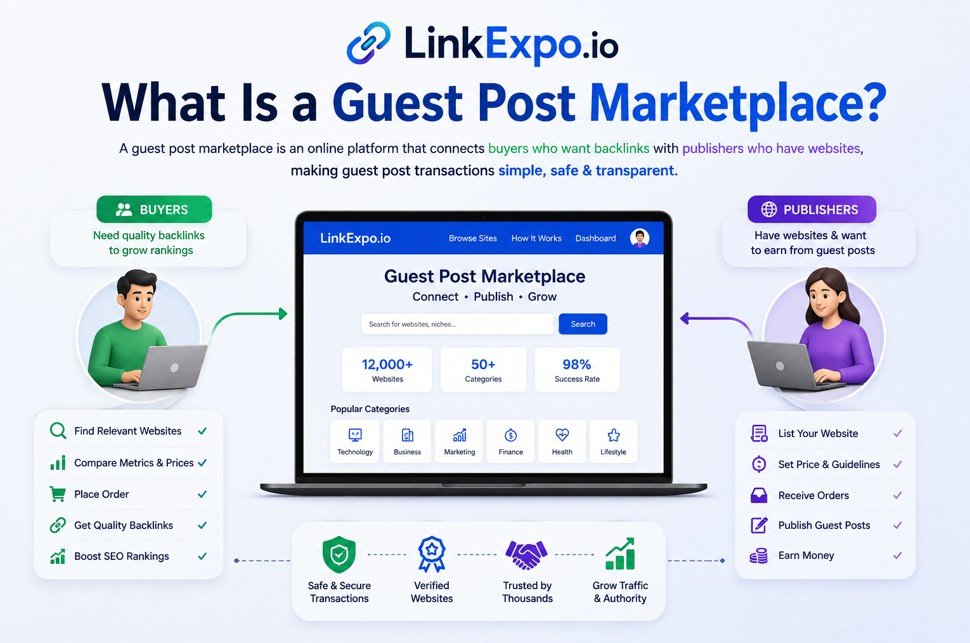
A guest post marketplace is an online platform that connects website owners who want to publish sponsored content with buyers who want backlinks or brand exposure. Think of it as a digital storefront for link building.
Publishers (the website owners) list their sites with details like domain authority, niche, traffic, and pricing. Buyers (marketers, SEOs, or business owners) browse these listings, pick a site that fits their goals, and place an order.
The marketplace usually handles the entire transaction. This includes:
- Matching buyers with relevant publishers
- Managing communication between both parties
- Processing secure payments
- Tracking order status from content submission to publication
Some marketplaces also offer anonymous transactions, where neither the buyer nor the publisher knows the other’s identity. This protects both sides from unwanted spam and keeps business relationships professional.
How Does a Guest Post Marketplace Work?
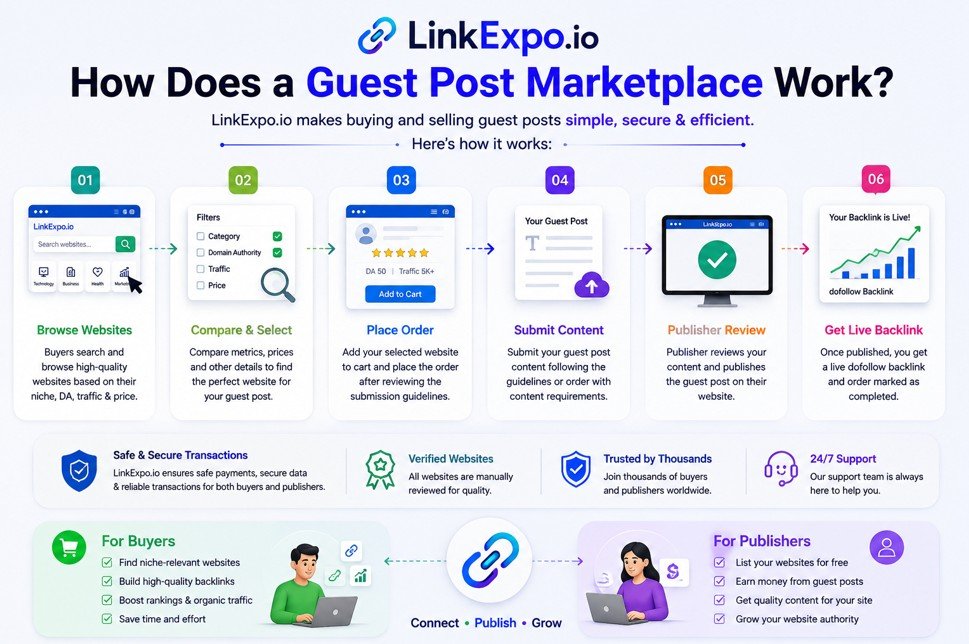
The process is simpler than most people expect. Here’s the typical flow:
Step 1: Browse or Filter Listings
Buyers search the marketplace using filters like niche, domain rating (DR), traffic volume, or price range.
Step 2: Select a Website
Once a site fits the budget and niche, the buyer places an order and specifies requirements, such as anchor text, target URL, and topic.
Step 3: Content Creation
Depending on the marketplace, either the buyer submits a ready-made article, or the publisher (or marketplace team) writes it for an added fee.
Step 4: Review and Approval
The publisher reviews the content for quality and relevance before scheduling it for publication.
Step 5: Publication and Reporting
Once live, the buyer receives a live URL as proof, along with confirmation that the link and anchor text match what was ordered.
This entire cycle usually takes anywhere from a few days to two weeks, depending on the publisher’s editorial calendar.
Why Marketers Use Guest Post Marketplaces
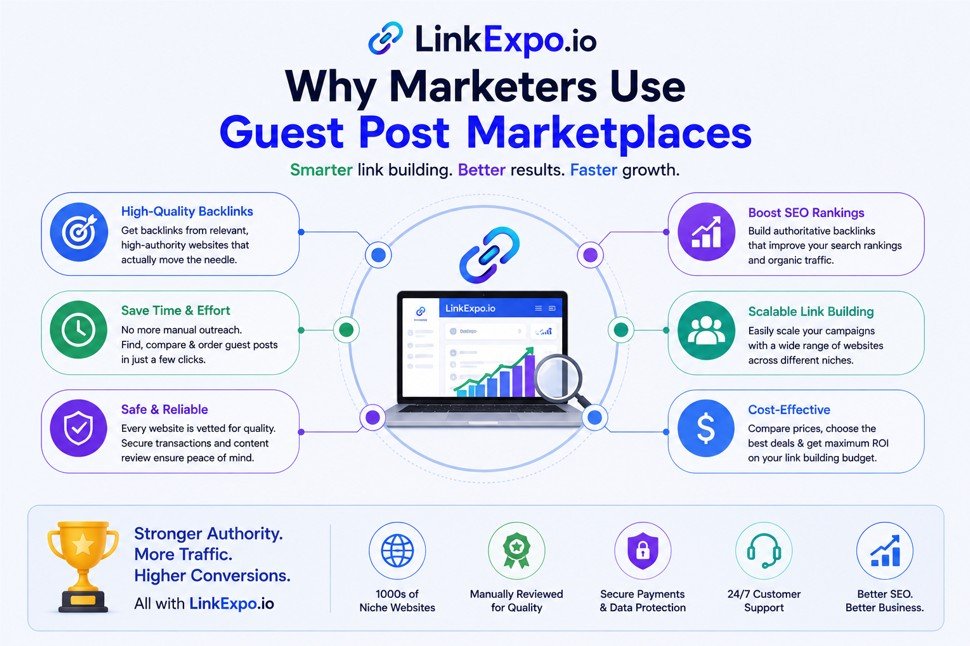
Manual link building is slow, unpredictable, and time-consuming. A marketplace solves several pain points at once.
Time savings. Instead of sending dozens of outreach emails, buyers get instant access to hundreds of vetted publishers in one place.
Transparent pricing. Most marketplaces show upfront costs, so there’s no back-and-forth negotiation over price.
Quality control. Reputable platforms vet publishers before allowing them to list, filtering out low-quality or spammy sites.
Scalability. Agencies managing multiple clients can place bulk orders across different niches without hiring a full outreach team.
Reduced risk. Payment protection and dispute resolution systems mean buyers aren’t sending money to strangers with no guarantee of delivery.
Key Features of a Trustworthy Marketplace
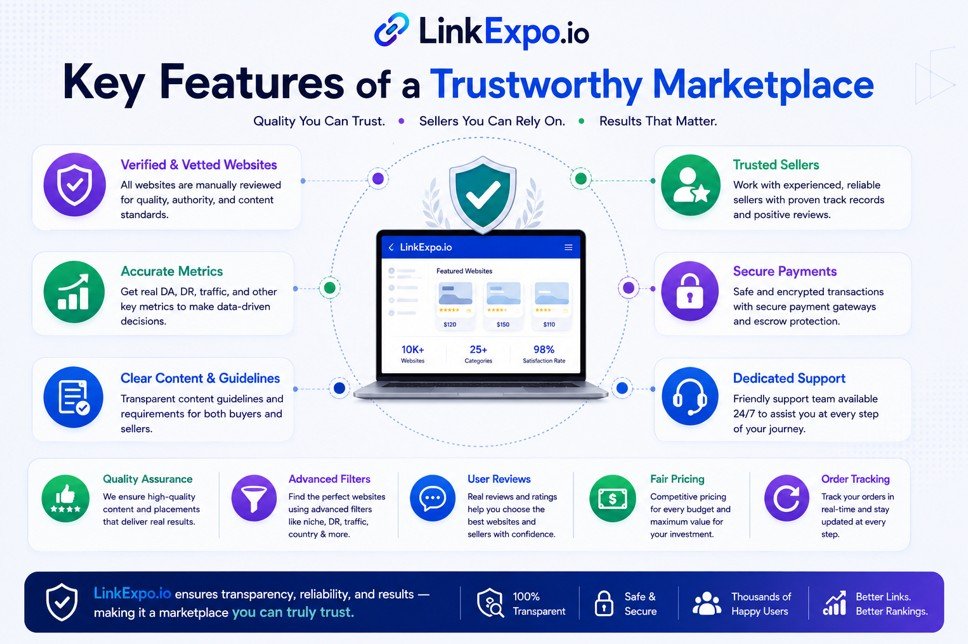
Not all platforms are built the same. Before committing your budget, check for these essential features.
Verified Traffic Metrics
A trustworthy marketplace displays real traffic data, often pulled from tools like Ahrefs or SEMrush, instead of relying on the publisher’s self-reported numbers.
Niche Relevance Filters
Look for platforms that let you filter by industry. A backlink from a site in your niche carries more topical relevance and SEO value than one from an unrelated site.
Clear Editorial Guidelines
Good marketplaces publish clear rules about content length, linking policy (dofollow vs. nofollow), and turnaround time.
Secure Payment System
Escrow-style payments, where funds are held until the post goes live, protect buyers from paying for content that never gets published.
Anonymous Communication
Many established platforms route all messages through a support inbox, so buyers and sellers never exchange personal contact details. This keeps the process professional and prevents spam or price undercutting outside the platform.
Order Tracking Dashboard
A dashboard where buyers can monitor order status, from “in progress” to “published,” adds transparency that spreadsheets and email threads can’t match.
Guest Post Marketplace vs. Manual Outreach
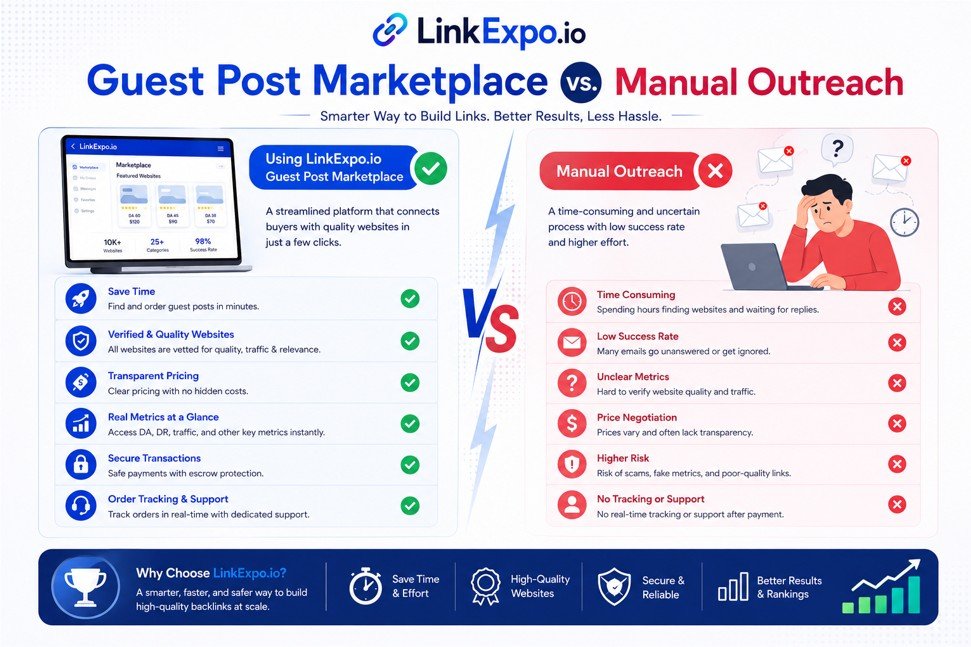
| Factor | Guest Post Marketplace | Manual Outreach |
| Time required | Minutes to place an order | Days to weeks for replies |
| Cost transparency | Fixed, upfront pricing | Often negotiated, unpredictable |
| Site quality control | Vetted publisher network | Depends entirely on your research |
| Scalability | Easy to place bulk orders | Hard to scale without a team |
| Relationship building | Mostly transactional | Can build long-term partnerships |
| Risk of scams | Lower, with payment protection | Higher, especially with unknown contacts |
| Anonymity options | Often available | Rarely possible |
Manual outreach still has its place, especially for building genuine relationships with high-authority publishers who don’t sell links openly. But for most SEO campaigns, a marketplace delivers faster, more predictable results.
How to Choose the Right Marketplace
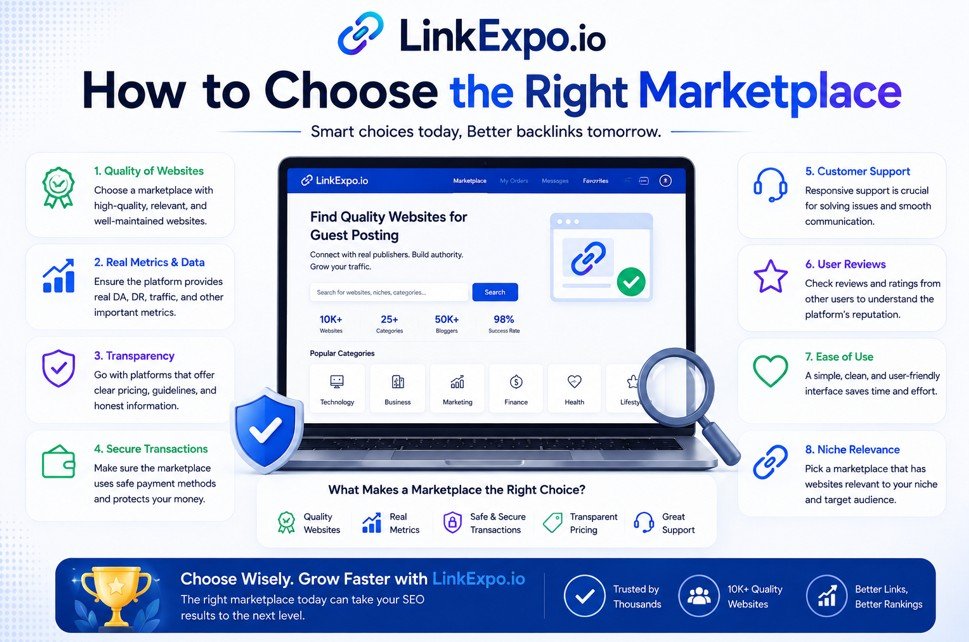
Picking the right platform matters more than picking the cheapest one. Here’s what to evaluate before signing up.
1. Check the Publisher Vetting Process
Ask how the marketplace screens new publishers. Platforms that approve every website without review tend to have lower-quality inventory.
2. Look at Real Traffic Data
Cross-check the traffic numbers shown on the platform against a free tool like Ubersuggest or a quick Google index check. If the numbers don’t match up, that’s a warning sign.
3. Read Reviews From Actual Buyers
Search for reviews on independent forums or communities, not just testimonials on the marketplace’s own homepage.
4. Test With a Small Order First
Before committing a large budget, place one or two orders to evaluate turnaround time, communication, and content quality.
5. Understand the Refund Policy
A trustworthy platform explains exactly what happens if a publisher misses a deadline or a post gets taken down after publication. If you’d rather not have a publisher know who’s behind an order (or vice versa), choose a platform specifically built around anonymity rather than one that shares contact details by default.
Red Flags to Avoid
Some warning signs should make you pause before spending money.
- Unrealistic pricing. A $5,000 domain rating site selling links for $10 usually means fake metrics or a private blog network (PBN).
- No editorial standards. If a marketplace lets any topic get published on any site regardless of relevance, the links carry less SEO value.
- No live URL proof. Legitimate platforms always confirm publication with a working link.
- Pushy upsells. Constant pressure to buy “premium placement” or “guaranteed rankings” is a marketing gimmick, not an SEO guarantee.
- Hidden fees. Always check whether the listed price includes content writing, or if that’s billed separately.
Pros and Cons of Using a Marketplace
Pros:
- Saves significant time compared to outreach
- Transparent, upfront pricing
- Access to a wide range of niches in one place
- Built-in payment protection
- Easier to scale campaigns for agencies
Cons:
- Some platforms include lower-quality or spammy sites
- Less personal relationship-building with publishers
- Prices can add up quickly for high-volume campaigns
- Requires due diligence to avoid overpaying for weak metrics
How to Sell Guest Posts on Your Own Site
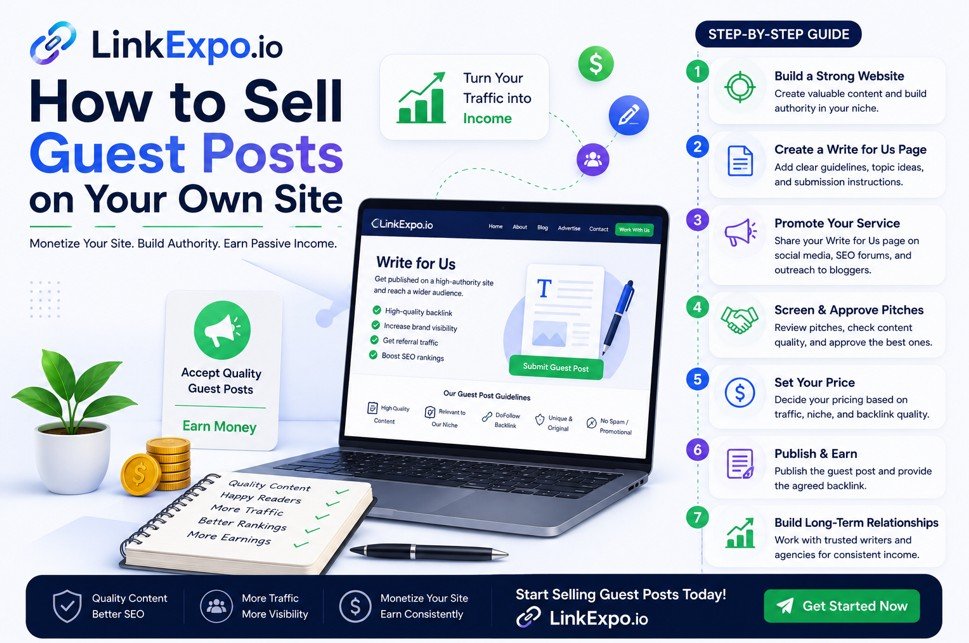
If you run a website with decent traffic, listing it on a marketplace can turn into a steady income stream. Search engines evaluate the quality and context of a link far more than where it came from — Google’s own guidance on link spam focuses on manipulative intent and pattern, not the mere existence of a paid placement. A genuinely relevant, well-written article placed on a real site with an engaged audience reads as a natural editorial mention. A poorly written, off-topic post stuffed with links reads as manipulation, regardless of whether it came from a platform or a cold email.
Set fair pricing. Base your rate on real traffic, domain authority, and niche demand rather than copying competitor pricing blindly.
Keep editorial standards. Reject content that’s poorly written, off-topic, or stuffed with irrelevant links. Quality control protects your site’s long-term reputation.
Respond quickly. Buyers often compare multiple publishers before choosing one. Fast responses increase your chances of winning orders.
Stay consistent. Publishing sponsored content regularly, without letting it overwhelm your organic content, keeps your site healthy in the eyes of both readers and search engines.
Pricing: What Should You Expect to Pay?
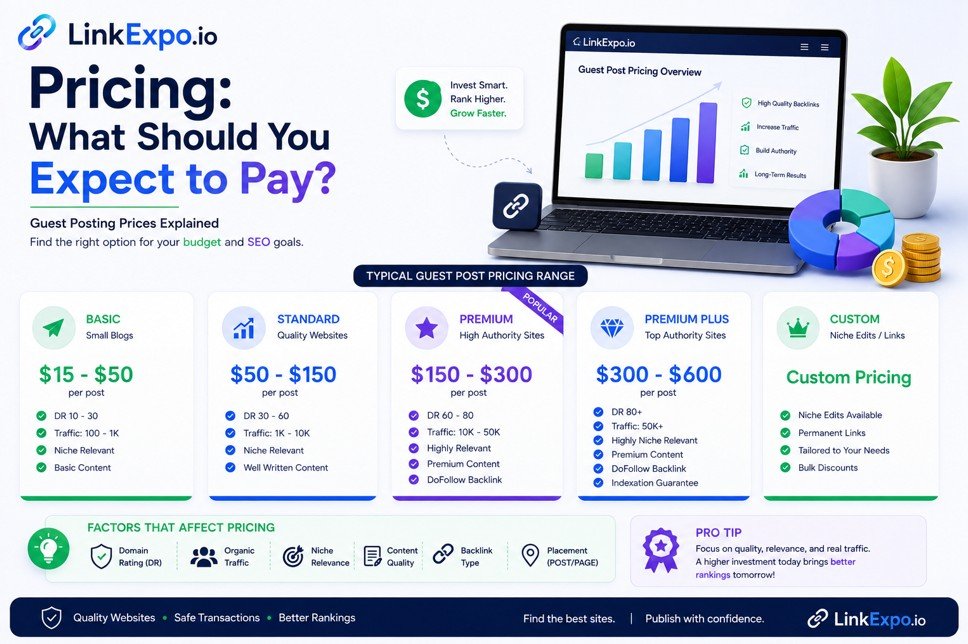
Guest post pricing varies widely based on the site’s authority and niche. As a general guide:
- Low authority sites (DR 10–30): 30–100 per post
- Mid authority sites (DR 30–50): 100–300 per post
- High authority sites (DR 50–70): 300–800 per post
- Premium/niche-specific sites (DR 70+): $800 and up
Prices also shift based on niche competitiveness. Finance, health, and legal niches (“YMYL” topics) typically cost more because fewer publishers accept content in these categories.
Frequently Asked Questions
- Is buying guest posts against Google’s guidelines? Google’s guidelines discourage links bought specifically to manipulate rankings. However, guest posting for genuine exposure, combined with quality content, remains a common and widely used practice. Using nofollow or sponsored tags where appropriate helps stay compliant.
- How long does it take to see SEO results from guest posts? Most sites notice ranking movement within 4–12 weeks after a backlink goes live, though results depend on the site’s overall authority and competition level.
- What’s the difference between dofollow and nofollow links? A dofollow link passes SEO authority to your site, while a nofollow link tells search engines not to pass ranking value, though it can still drive referral traffic.
- Are anonymous guest post marketplaces safe? Yes, when the platform manages payments and communication through a secure system. Anonymity protects both buyers and publishers from spam and unwanted solicitation.
- Can I write my own content for a guest post order? Most marketplaces allow buyers to submit their own articles, as long as it meets the publisher’s editorial guidelines.
- How many guest posts should I buy per month? This depends on your niche competitiveness and budget. Many SEOs recommend starting with 2–5 quality links per month rather than a large batch of low-quality ones.
- What niches typically cost more for guest posts? Finance, health, legal, and casino/gambling niches usually cost more due to stricter editorial policies and limited publisher availability.
- Can guest posts hurt my website? Poor-quality, irrelevant, or spammy guest posts can hurt rankings if search engines flag unnatural link patterns. Choosing relevant, vetted publishers reduces this risk significantly.
- Do I need to disclose sponsored content? Many countries have advertising disclosure laws requiring sponsored content to be marked as such. Reputable publishers usually add a small disclosure note automatically.
- How do I verify a website’s traffic before buying a guest post? Use tools like Ahrefs, SEMrush, or Google’s site: search operator to check indexing and estimated traffic before placing an order.
Conclusion
A guest post marketplace takes the guesswork and grind out of link building. Instead of chasing cold email replies for weeks, you get direct access to vetted publishers, upfront pricing, and a streamlined process from order to publication.
If you’re evaluating platforms, prioritize transparency above everything else: visible pricing, verified metrics, and a payment system that protects you until the work is actually done. The key is doing your homework. Check traffic data, read independent reviews, and start with a small test order before scaling up. Whether you’re buying links to grow your site’s authority or selling guest post slots on your own platform, the right marketplace can save time, reduce risk, and deliver measurable SEO value.